
Recent reports about Vibrio bacteria in Long Island waters have understandably raised concerns. However, the media is not reporting on a recent discovery of Vibrio, but rather on measurements that likely occurred over recent summers.
Vibrio is a naturally occurring group of bacteria found in coastal and estuarine environments. Unlike Enterococcus, which our Blue Water Task Force routinely tests for as an indicator of fecal contamination, Vibrio is not itself a direct measure of sewage pollution. However, both exist within coastal systems and are influenced by overlapping environmental conditions.
Vibrio bacteria are most abundant in warm, brackish waters and tend to peak in summer and early fall when temperatures are highest. They are commonly found in estuaries where fresh and salt water mix, particularly in low-circulation areas. Their abundance is largely controlled by environmental factors such as temperature, salinity, and interactions with plankton. While Vibrio occurs naturally, its range and seasonal persistence have been shifting northward in recent years, consistent with warming ocean temperatures (Archer et al. 2023). Recent media coverage is not reporting on a new discovery of Vibrio, but rather on measurements likely collected over past summers.
Nutrient pollution from runoff and wastewater can indirectly contribute to conditions that promote Vibrio growth. Excess nutrients fuel algal blooms and increase organic matter, which can lead to low-oxygen conditions and shifts in plankton and food web dynamics. These changes can create favorable environments for Vibrio in marine and estuarine waters. On Long Island, nutrient inputs from septic systems, cesspools, and stormwater runoff remain a major driver of ecosystem stress, degrading water quality and contributing to conditions that can support Vibrio proliferation.
This is why testing for fecal indicator bacteria like Enterococcus remains essential. Elevated Enterococcus levels signal fecal pollution (sewage or animal waste) and indicate increased potential for human exposure to pathogens, as well as broader impacts from land-based sources of pollution.
As climate change drives warmer water temperatures and more intense rainfall events, coastal systems are under increasing pressure. Warmer waters can enhance conditions favorable for naturally occurring bacteria like Vibrio, while heavier rainfall can increase runoff and sewage overflows that degrade water quality. This makes continued investment in wastewater infrastructure, expanded monitoring, and public awareness more important than ever.
Our testing program provides essential, timely data to identify fecal contamination events and help protect public health. While we do not test for Vibrio, understanding how these bacteria respond to the same changing environmental conditions provides important context for what is happening in our waters, and reinforces why reducing pollution at its source remains critical.
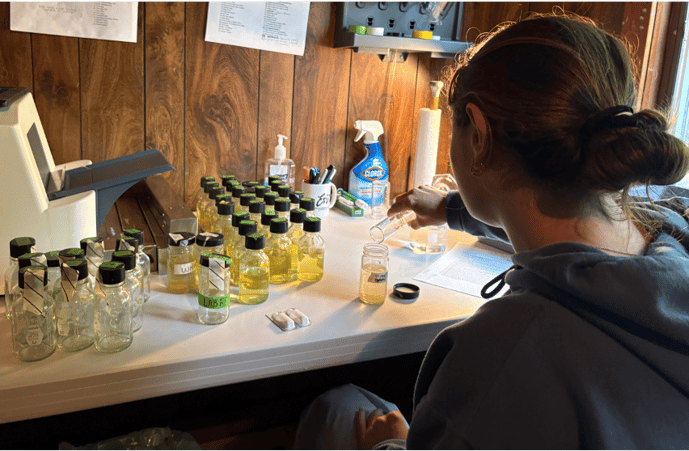
Analyzing enterococcus samples at the Blue Water Task Force lab at Peconic Baykeeper.
You can reduce exposure to polluted water by following a few simple practices:
- Check local water quality conditions before you go: use resources like the Blue Water Task Force and Suffolk County beach monitoring program results, and only swim when bacteria levels are reported as low.
- Do not enter the water with an open wound or cut, as it increases the risk of infection.
- Individuals who are immunocompromised should take extra precautions, especially when water quality is poor.
- Always follow swim advisories and beach closures.
- Avoid swimming near storm drains, creeks, inlets, and river mouths where polluted runoff can enter the ocean.
- After heavy rain, stay out of the water for at least 24–48 hours—or longer depending on local conditions and official guidance.
- Rinse your hands with fresh water before eating at the beach, and rinse your head and entire body with fresh water when you leave the beach.
To better understand what the results on the Blue Water Task Force map mean, check out this guide, which breaks down how to interpret the data and what it means for water quality at your local beach.
 As Blue Water Task Force Manager, Jaime is passionate about protecting the water. With a Master’s degree in Biological Sciences, she has gained extensive experience addressing critical water quality issues through her previous roles with the National Park Service and various other environmental organizations.